
Every dog’s breath smells a little like dog. But if you’re turning your head away during cuddles, something is probably going on. Persistent bad breath, called halitosis, isn’t a normal part of being a dog, even in older dogs.
The good news is that the most common cause is also the most fixable. Here’s what usually causes bad dog breath, what different smells can mean, and when it’s time to call your vet.
1. Plaque, tartar and gum disease
This is the big one. According to VCA Animal Hospitals, periodontal disease from plaque and tartar buildup is the most common cause of bad breath in dogs. Bacteria in plaque break down food and tissue and release smelly sulfur compounds. That’s the classic “dog breath” smell.
It’s also extremely common. The AVMA notes that most dogs show early signs of periodontal disease by age 3.
2. Food stuck around the teeth
Tiny bits of food can get trapped between teeth and in pockets along the gumline. As they break down, they add to the odor. Dogs with crowded teeth, like many small and flat-faced breeds, are especially prone to this.
3. Small breed or flat-faced breed
Toy breeds and flat-faced breeds tend to have crowded teeth, which makes plaque harder to keep under control. If you have a Chihuahua, Yorkie, Pug or French Bulldog, dental care deserves extra attention.
4. Diet and scavenging
Some dogs eat things we’d rather not think about: garbage, dead animals, or poop. If your dog’s breath suddenly smells awful after a walk, this may be the simple explanation. Keeping trash secured and cleaning up the yard helps.
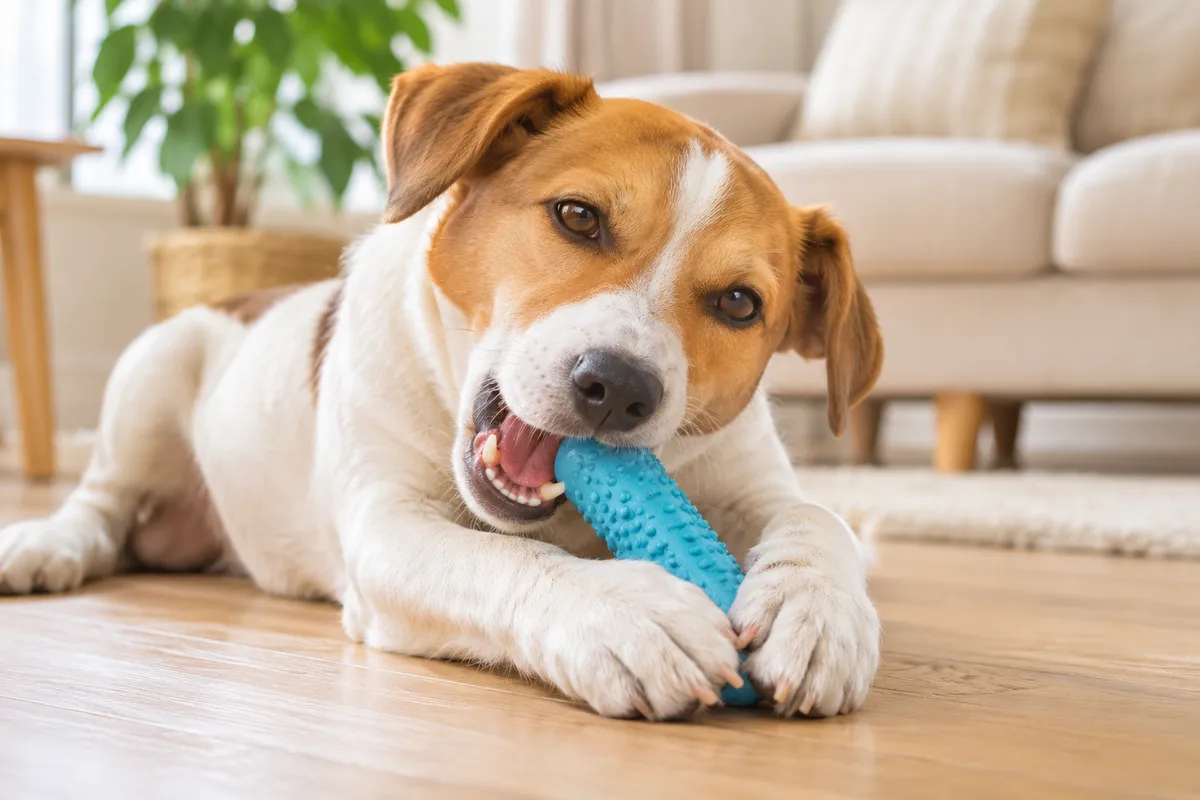
5. Something stuck in the mouth
A stick fragment, bone splinter or piece of toy wedged between teeth or in the gums can cause a sudden, strong odor. Look for pawing at the mouth, drooling or reluctance to eat.
6. Oral growths
Growths in the mouth can become infected or ulcerated and smell strongly. Any lump, swelling or bleeding in the mouth should be checked by a vet.
7. A health problem beyond the mouth
Sometimes bad breath is a clue to a problem elsewhere in the body. UC Davis School of Veterinary Medicine lists liver disease, kidney disease and diabetes among the systemic diseases that can cause bad breath. These need a vet’s diagnosis, so don’t try to fix them at home.
What different smells can mean
| Smell | Possible cause | What to do |
|---|---|---|
| Rotten or “fishy” | Plaque, tartar, gum disease | Start daily dental care and book a dental checkup |
| Like poop or garbage | Scavenging | Secure trash and supervise outdoors |
| Sweet or fruity | Possible diabetes | See your vet soon |
| Like urine or ammonia | Possible kidney problem | See your vet soon |
| Very foul, with vomiting or yellow gums | Possible liver problem | See your vet right away |
Smell alone can’t diagnose anything. If the odor is new, unusual or getting worse, your vet is the right person to find the cause.
When to see your vet
Book an appointment if bad breath comes with any of these:
- Red, swollen or bleeding gums
- Loose or broken teeth
- Drooling, pawing at the mouth or chewing on one side
- Eating less or losing weight
- Drinking or urinating more than usual
- Vomiting, or yellowing of the gums or eyes
How to keep your dog’s breath fresh
When dental disease is the cause, daily care at home makes a real difference.
- Brush if you can. Use a dog toothpaste, never human toothpaste, which can contain xylitol, an ingredient that is toxic to dogs.
- Add no-brush options. Dental sprays, water additives, chews and toys all help reduce plaque. See our guide: How to Clean Your Dog’s Teeth Without Brushing.
- Keep up with checkups. Your vet can spot problems early and recommend a professional cleaning when it’s needed.
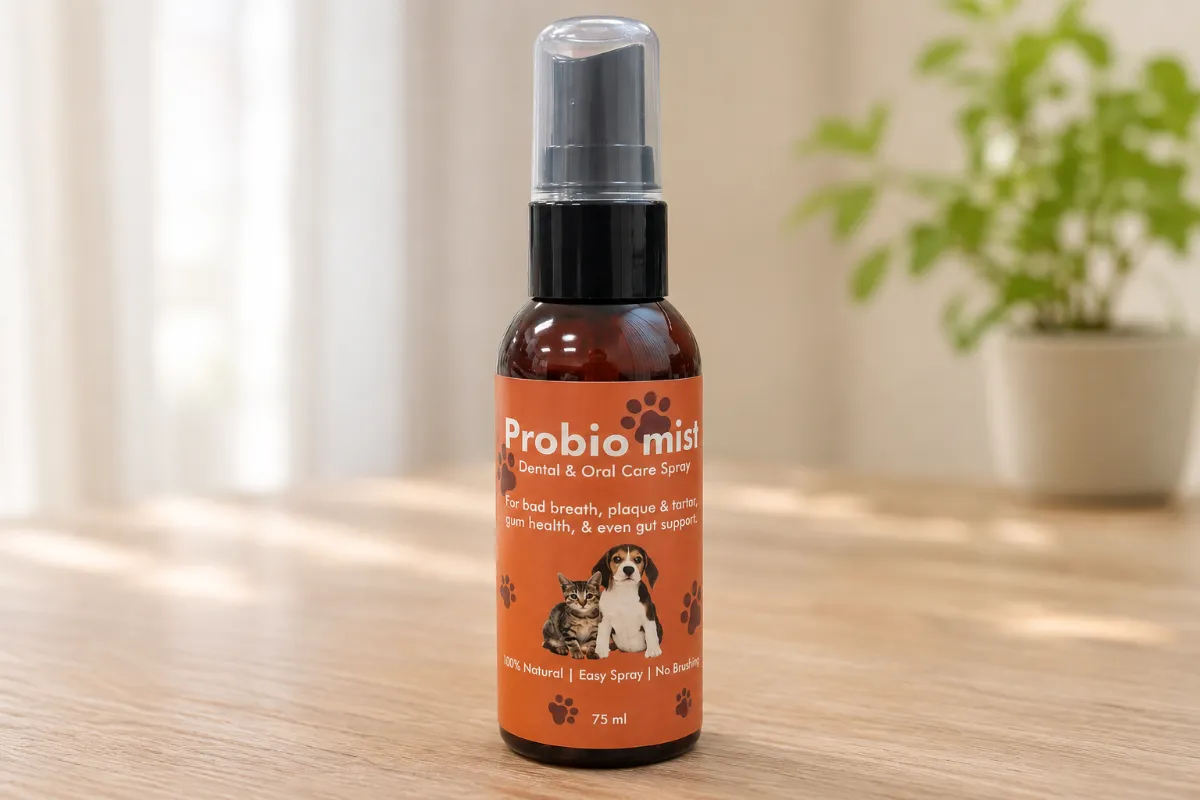
For dogs who won’t tolerate a toothbrush, we made PROBIO mist, a no-brush daily dental spray for dogs and cats. It’s made in Japan from fermented organic soybean protein and ionized alkaline water, with no preservatives and no added fragrance. Lift the lip, spray 2–3 times on each side, and you’re done. Spray-shy dogs can have it misted into their water bowl or food instead.
FAQ
Is it normal for dogs to have bad breath?
A mild “dog” smell is normal. Strong or persistent bad breath is not, and it usually points to dental disease or another health issue.
Can bad breath in dogs be a sign of something serious?
Yes. Most cases come from the mouth, but bad breath can also be linked to kidney disease, liver disease or diabetes. A new or unusual smell is worth a vet visit.
Does bad breath go away on its own?
Rarely. Plaque keeps building up unless it’s removed, so the smell usually gets worse over time without daily care.
Can puppies have bad breath?
Puppies can have unusual breath while their adult teeth come in. If it’s very strong or comes with other signs, ask your vet.
The bottom line
Bad dog breath is usually a dental problem, and dental problems respond well to daily care. Start a simple routine your dog will accept, keep an eye on unusual smells or symptoms, and see your vet regularly.
Sources: Halitosis in Dogs — VCA Animal Hospitals; Dog with Bad Breath — UC Davis School of Veterinary Medicine; Pet dental care — American Veterinary Medical Association